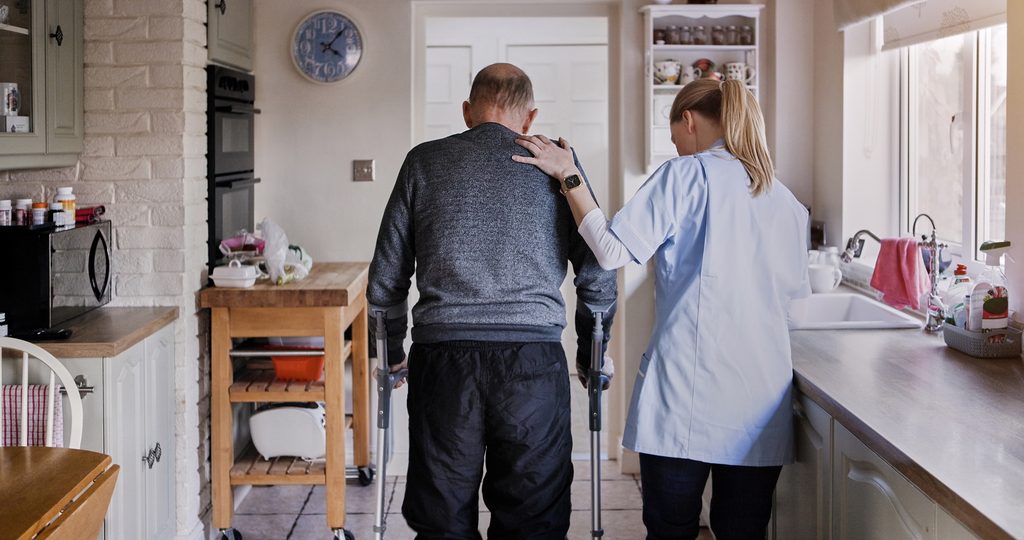
In-home care means a trained caregiver comes to your home to help with the everyday things that have gotten harder: showering and getting dressed, making meals, getting to appointments, or simply not being alone all day. It lets a person keep living in the place they know, on their own schedule, with help that fits around them.
We are a family of nurses, and we have provided in-home care across San Diego County since 1999. Some of the calls we get come from adult children who live nearby or across the country. Many come from people planning ahead for themselves. This guide answers the questions we hear most, in plain language.

What In-Home Care Includes
Every plan is different, but most in-home care falls into a few groups:
- Personal care: help with bathing, dressing, grooming, toileting, and moving safely from the bed to a chair.
- Around the house: meal preparation, laundry, light housekeeping, and keeping the kitchen stocked.
- Getting out: rides to doctor appointments, grocery shopping, and errands.
- Company: conversation, card games, short walks, and someone who notices when something seems off.
- Memory care: patient, steady support and supervision for people living with dementia or Alzheimer’s.
- Reminders: medication reminders, so pills are taken at the right time.
You can see everything we offer on our home care services page.
What In-Home Care Is Not
In-home care is non-medical. It is different from home health, which is skilled medical care, like wound care or physical therapy, that a doctor orders for a set period of time. The two often work side by side. If you are not sure which one you need, our article on home care vs. home health explains the difference.
In-home care is also not a move. Nobody has to give up their home, their garden, their neighbors, or their dog to get help.
Who In-Home Care Helps
There is no single type of person who uses in-home care. Here are a few situations we see often:
- A dad coming home after hip surgery. He did well in the hospital, but at home he can’t safely get in the shower or manage the stairs yet. A caregiver for a few weeks helps him through recovery, and then the hours go down.
- A mom with early memory changes. Her daughter works full time and worries about the stove, skipped meals, and long afternoons alone. A caregiver comes on weekdays, keeps her company, makes lunch, and keeps an eye on things.
- A husband caring for his wife. He has done everything himself for two years and he is worn out. A caregiver two days a week gives him time to rest, see his own doctor, and have a few hours to himself. This is called respite care.
- Someone planning ahead. A retired teacher who lives alone no longer drives at night and finds grocery shopping tiring. A caregiver handles errands and meals twice a week, so she can keep doing things her own way.
If you are wondering whether a parent might need help, our post on the signs your parent needs help at home is a good place to start.
What a Visit Can Look Like
Families often ask what a caregiver actually does during a visit. Here is one example of a four-hour morning:
- 9:00 Say good morning, help with a shower, get dressed, and make the bed.
- 9:45 Make breakfast together and give a reminder about morning medications.
- 10:30 Start a load of laundry and tidy the kitchen and bathroom.
- 11:00 A walk around the block, a drive to the pharmacy, or a video call with the grandkids.
- 12:30 Fix lunch, fold the laundry, and make sure everything is set for the afternoon.
The plan is built around the person, not the other way around. If Mom likes her coffee before she showers, that is how the morning goes.
How Much In-Home Care Do You Need?
Often less than people expect, at least at first. Visits start at four hours, and you choose the days. Some people have a caregiver two mornings a week. Others need help every day, overnight, or around the clock. You can add hours as needs grow, or scale back as someone recovers. There is never a long-term contract.
Cost depends on the hours and the kind of help needed. Our home care cost page explains what shapes a quote and how families pay, including private pay and long-term care insurance. If you have a long-term care policy, we can help with the paperwork. Medicare generally does not pay for ongoing non-medical in-home care.
How to Get Started With In-Home Care
- Reach out. Call (760) 941-2273 or contact us online. We return every call within 30 minutes.
- Free in-home evaluation. A nurse visits you or your loved one at home and talks through the daily routine, health needs, and what would make life easier. There is no cost and no obligation.
- Your care plan. The nurse builds a plan around the schedule and the kind of help you want.
- Care begins. We match you with a Registered Home Care Aide whose skills and personality are a good fit. A nurse is on call 24/7 if anything changes.
If a need comes up quickly, like a hospital discharge on short notice, call anyway. We can often help with last-minute care.
What to Have Ready Before You Call
You don’t need everything figured out before you call. These details just help the first conversation go faster:
- Who needs care, and where they live
- What a typical day looks like, and which parts are hardest
- Any health conditions, such as memory changes, a stroke, or a recent surgery
- A list of current medications and doctors
- The days and times when help is needed most
- The long-term care insurance policy number, if there is one
- The one thing that worries you most right now
That last one matters most. It is usually where the care plan starts.
Choosing an In-Home Care Agency
Not every agency works the same way. A few things worth checking:
- Is the agency licensed by the State of California as a Home Care Organization?
- Are the caregivers employees of the agency, background checked, and registered as Home Care Aides?
- Can you reach a nurse day or night?
- Will you be locked into a long-term contract?
Our questions to ask when choosing a home care agency page has the full list, and we are happy to answer every one of them. You can also read about home care licensing on the California Department of Social Services website.
Common Questions About In-Home Care
Do I need a doctor’s order to start in-home care?
No. You, a family member, or anyone helping can call us directly to talk about care.
Can I set up care for myself?
Yes. Many of our clients call on their own behalf. You decide what help you want and when you want it.
Can family stay involved?
Yes. We keep families updated, and you can call the office any time with questions or changes.
What if my parent doesn’t want help?
That is very common. Starting small, like help with errands or a few hours of company, often feels easier to accept. Our post on how to talk to your parents about home care has words that tend to help.
Do you serve my area?
We are based in Vista and serve families throughout San Diego County, including Carlsbad, Oceanside, Escondido, San Marcos, Encinitas, and Fallbrook. See all of our areas we serve.
Talk With a Family of Nurses
In-home care works best when it starts with a real conversation. Schedule a free in-home evaluation, and one of our nurses will come to you, listen, and recommend the right level of care. There is no cost, no pressure, and no long-term contract.