
How to Talk to Your Parents About Home Care

Knowing how to talk to your parents about home care can feel harder than finding the care itself. Your parents raised you, and suggesting that they need help can feel like turning the tables. As a family of nurses who have helped San Diego County families through this conversation since 1999, we have seen what helps it go well, and what tends to shut it down. Below you will find practical steps, example words you can use, and answers to the objections families hear most.

Get Ready Before You Talk

A little planning makes the conversation calmer and more focused.

  • Write down what you have seen. Note two or three specific examples, with dates, like a missed appointment or a fall in the garden.
  • Get the family on the same page. If you have brothers or sisters, talk with them first so your parent doesn’t hear three different opinions.
  • Know what you are asking for. “A few mornings of help each week” is easier to say yes to than “full-time care.”
  • Learn your options ahead of time. Calling an agency yourself first means you can answer your parent’s questions about cost, schedules, and who the caregivers are.
  • Decide who leads. Choose the one or two people your parent trusts most.

Start Before There Is a Crisis

When it comes to how to talk to your parents about home care, timing matters. The best time to bring up help at home is before a fall or a hospital stay forces a quick decision. An early talk gives your parent time to think, ask questions, and feel part of the choice. Even if nothing changes right away, you have opened the door, and the next conversation will be easier.

Pick the Right Time and Place

Choose a calm, private moment when nobody is rushed or tired. A quiet coffee at the kitchen table or a drive together often works better than a formal sit-down. Holiday dinners with the whole family watching are usually not the right setting.

Example Ways to Start the Conversation

The first sentence is often the hardest. Here are openers families have found helpful. Use the one that fits your parent, and put it in your own words.

  • After a fall or a close call: “Mom, I keep thinking about when you slipped in the kitchen last month. I’m not trying to take anything away from you. I would just feel better knowing someone is here a few mornings a week. Could we talk about what that might look like?”
  • When you are stretched thin: “Dad, I love helping you, and I want to keep doing it. But between work and the kids, I’m worried I’ll miss something important. Would you be open to having someone help with driving and errands, so our time together can just be time together?”
  • Asking for their advice: “I’ve been reading about how people stay in their own homes longer. If you could get help with one thing around the house, what would it be?”
  • Making it about you: “Would you try this for me? It would help me worry less when I can’t be here.”
  • After a doctor’s visit: “The doctor said you shouldn’t be driving for a while. How about we find someone to take you to your appointments and the grocery store, so you don’t have to wait on my schedule?”
  • When you live far away: “I hate being so far away. If someone could stop by a few days a week and let me know how you’re doing, I’d sleep a lot better.”

What to Say Instead

Small changes in wording can make a big difference.

  • Instead of “You can’t live alone anymore,” try “I want to make sure you can keep living here.”
  • Instead of “You need a babysitter,” try “Someone to help with the heavy lifting and errands.”
  • Instead of “We’ve already decided,” try “We’d like to figure this out together.”
  • Instead of “You’re always forgetting things,” try “I noticed the pills from Tuesday were still in the box. Is that getting harder to keep track of?”

Lead With What Your Parent Wants

Most older adults want the same thing: to stay in their own home and keep living their own way. Start there, and keep coming back to it. Help at home is not the opposite of independence. For many people, it is what makes independence possible.

Answer Their Worries With Respect

Expect some pushback. Here are the worries we hear most often, with examples of how you might answer.

  • “I don’t want a stranger in my house.” Try: “That makes sense. What if we met with the agency first, and you could ask them anything you want?” Caregivers from a licensed agency are background checked, fingerprinted through the Department of Justice, and registered with the State of California.
  • “We can’t afford it.” Try: “Let’s just find out what a few visits a week would cost before we decide.” Care can start with a few four-hour visits a week, and some long-term care insurance policies help pay for it.
  • “I don’t need help.” Try: “You’re right that you’re doing a lot on your own. This would just be help with the things that wear you out, like the shopping and the laundry.” Starting with something your parent enjoys, like rides to appointments or an afternoon of company, often goes over better.
  • “I’m not ready to give up control.” Try: “You’d be the one in charge. You pick the days, and you tell them what you want help with.”
  • “Your father and I have always managed.” Try: “You have, and that’s why we want to keep it that way. A little help now can keep things from getting harder later.”

Let Your Parent Stay in Charge

People accept help more easily when they get to shape it. Ask your parent which days work best, what tasks they would like help with, and what they would rather keep doing themselves. Invite them to be part of the in-home evaluation, so the plan is built around their routine and not yours.

Suggest a Small Start

A trial run can lower the stakes. You might say, “Let’s try it for a few weeks and see how it feels.” With no long-term contract, your parent can adjust the schedule, add time, or scale back. Many families start with help a couple of days a week and add more only when it is needed.

Make the First Visit Easy

How the first visit goes can shape how your parent feels about care. If you can, be there to introduce the caregiver. Plan something simple for the first day, like a trip to the store or making lunch together. Give it a few weeks before deciding whether it is working, since most people need a little time to get comfortable with someone new.

When Brothers and Sisters Don’t Agree

It is common for siblings to see things differently, especially when one lives nearby and others live far away. Share the same specific examples with everyone, and agree on one or two next steps instead of trying to settle everything at once. A free in-home evaluation can help, too, because the whole family hears the same recommendation from a nurse.

If the First Talk Doesn’t Go Well

It is normal for the first conversation to end without a yes. Give your parent time, then try again. Sometimes the idea lands better coming from their doctor, a close friend, or a faith leader they respect. San Diego County’s Aging & Independence Services is also a helpful resource for local information and support. If there is a real safety concern, such as wandering, repeated falls, or leaving the stove on, it is okay to be more direct about why help can’t wait.

Questions About How to Talk to Your Parents About Home Care

How to talk to your parents about home care
Can my parent call you on their own?

Yes. Many people call us for themselves, and you do not need a doctor’s order to start home care. Learn more in our article on home care vs. home health.

Can I call you first, before I talk to my parent?

Yes, and many families do. We can answer your questions about how care works, so you feel ready for the conversation.

What if my parent lives in San Diego County and I live far away?

Many of the families we work with arrange care from out of town. We meet with your parent at home, talk with you by phone, and a nurse is on call 24 hours a day, 7 days a week.

What should we ask an agency before choosing one?

Ask about licensing, caregiver screening, contracts, and who answers the phone after hours. Our page of questions to ask is a good place to start.

What if my parent has memory loss?

Conversations about care can be harder when dementia is involved. Keep things short and simple, focus on one practical task at a time, and lean on their doctor for support. Our caregivers are dementia-trained. Read more about our dementia home care.

We Are Here When You Are Ready

Learning how to talk to your parents about home care takes patience, and you do not have to have every answer before you call. We are a family-owned agency based in Vista, caring for families across North County and San Diego County. Call us any time. If you leave a message, even after hours, we call you back within 30 minutes.


Similar Posts

  • Home Care vs. Home Health: What’s the Difference?

    When you or a loved one needs help at home, you will often hear the terms home care and home health care and assume they mean the same thing.

    They do not.

    Both services allow people to receive assistance in the comfort of their own home, and the two often work together. However, they serve very different purposes.

    Home health care provides intermittent skilled medical services and requires an order from a physician or other authorized healthcare provider. Home care does not require a doctor’s order and provides the ongoing personal care, supervision, companionship and day-to-day assistance a person may need to remain safely and comfortably at home.

    Understanding the difference can help you choose the right type of care. In many situations, a person may benefit from having both home health and home care at the same time.

    What Is Home Health Care?

    Home health care is skilled medical care provided in a patient’s home.

    Home health services require an order from a physician or other authorized healthcare provider and are generally prescribed following an illness, hospitalization, surgery, injury or significant change in health.

    For Medicare-covered home health services, the patient must meet Medicare eligibility requirements, including having a need for intermittent skilled nursing or qualifying therapy services.

    Home health is designed to address a specific medical or rehabilitation need. It is not intended to provide continuous caregiving, supervision or household assistance throughout the day.

    What Services Does Home Health Provide?

    Depending on the patient’s condition and medical plan of care, home health may provide:

    • Skilled nursing visits
    • Medical assessments
    • Vital sign monitoring
    • Wound care and dressing changes
    • Medication assessment and education
    • Injections and certain medical treatments
    • Monitoring of medical conditions
    • Patient and family education
    • Physical therapy
    • Occupational therapy
    • Speech therapy
    • Medical social worker services
    • Rehabilitation after an illness, injury or hospitalization
    • Home safety evaluations
    • Limited home health aide services when the patient qualifies
    • Assistance with bathing or certain personal care needs when included in the approved home health plan of care

    The frequency of home health visits depends on the patient’s medical needs and plan of care.

    For example, a nurse may visit once or twice a week, while a physical therapist or other clinician may visit on a different schedule. Some patients may also receive visits from a home health aide for bathing or other limited personal care needs.

    The important thing for families to understand is that these are usually individual, scheduled visits. Home health does not normally provide a caregiver who remains in the home for several hours to assist with everyday needs.

    Does Home Health Require a Doctor’s Order?

    Yes.

    Home health is a medical service and requires an order from a physician or other healthcare provider authorized to order home health services.

    The provider determines that skilled home health services are medically necessary and establishes or approves a plan of care.

    What Is Home Care?

    Home care is different.

    Home care provides the hands-on, non-medical assistance, supervision and companionship people need in their everyday lives.

    Most importantly:

    You do not need a doctor’s order to start home care.

    A client, family member or responsible party can contact a home care agency directly to discuss services and arrange care based on the individual’s needs.

    At Experienced In Home Care, we can meet with the client and family, discuss their needs, complete an in-home evaluation and develop an individualized care plan.

    Home care can be provided for several hours at a time, throughout the day, overnight or around the clock depending on the client’s needs.

    What Services Does Home Care Provide?

    Home care can assist with many of the daily activities that home health does not provide on an ongoing basis.

    Services may include:

    • Bathing and shower assistance
    • Personal hygiene
    • Dressing and grooming
    • Toileting assistance
    • Incontinence care
    • Assistance transferring from a bed, chair, wheelchair or commode
    • Walking and mobility assistance
    • Fall-prevention supervision
    • Safety monitoring
    • Companionship
    • Dementia and memory care assistance
    • Meal planning
    • Meal preparation
    • Encouraging proper nutrition and hydration
    • Medication reminders
    • Light housekeeping
    • Laundry
    • Changing bed linens
    • Grocery shopping
    • Errands
    • Transportation
    • Assistance getting to medical appointments
    • Accompanying clients to appointments
    • Assistance with everyday routines
    • Respite care for family caregivers
    • Assistance following hospitalization or rehabilitation
    • Overnight care
    • Extended-hour care
    • 24-hour care when needed
    • Care management and coordination
    • Communication with family members and healthcare professionals when appropriate

    Home care helps fill the gaps between skilled medical visits and provides the ongoing assistance many older adults need to remain safely at home.

    A Simple Example of Home Health and Home Care Working Together

    Suppose an older adult returns home after being hospitalized or spending time in a rehabilitation facility.

    Their physician may order home health care.

    A home health nurse may visit periodically to:

    • Assess the patient’s medical condition
    • Check vital signs
    • Evaluate medications
    • Provide wound care
    • Educate the patient and family
    • Communicate medical concerns to the physician

    A physical therapist may also visit to work on:

    • Walking
    • Strength
    • Balance
    • Transfers
    • Rehabilitation exercises

    If appropriate, a home health aide may also visit to provide limited assistance with bathing or personal care.

    But once the home health visit is over, the patient may still need help for the remainder of the day.

    They may need someone to:

    • Help them safely get out of bed
    • Assist them to the bathroom
    • Prepare breakfast, lunch or dinner
    • Help them dress
    • Remind them to take medications
    • Encourage fluids
    • Prevent falls
    • Provide supervision
    • Take them to appointments
    • Pick up groceries
    • Do laundry
    • Provide companionship
    • Remain with them because they are confused or unsafe when left alone

    Those are home care services.

    This is why home health and home care frequently work together rather than replacing one another.

    Home Health Companies We Have Worked Alongside

    Over the years, Experienced In Home Care has worked alongside and coordinated care with a number of home health organizations in the San Diego area.

    Some of these have included:

    • Tri-City Home Health
    • Silverado Home Health
    • Kaiser Permanente Home Health
    • Seaport Scripps Home Health

    The home health company and the home care company are separate organizations, but they can communicate and work together to help provide continuity of care for the client.

    For example, a home health nurse may identify a medical concern during a skilled nursing visit, while the client’s home care aide may be present for several hours each day and can report changes in the client’s condition to the appropriate family member, agency nurse or healthcare provider.

    Home Health Does Not Replace Home Care

    This is one of the most common misunderstandings we hear from families.

    A physician may tell a patient that they are being discharged home with “home health,” and the family understandably assumes someone will be at the house for several hours every day.

    That usually is not what home health means.

    Home health generally provides intermittent skilled medical visits, not a caregiver who remains in the home for several hours assisting with meals, housekeeping, supervision, errands, companionship and everyday personal care.

    A home health nurse may come to assess the patient, perform wound care or provide another skilled service and then leave when that visit is completed.

    The patient may still need someone there for the rest of the day.

    That is where home care comes in.

    Home health and home care often complement each other very well. The home health team addresses the patient’s skilled medical and rehabilitation needs, while the home care team assists with the person’s daily routine, personal care, safety and quality of life.

    Does Medicare Pay for Home Health Care?

    Medicare may cover qualifying home health care when the patient meets Medicare’s eligibility requirements and receives services from a Medicare-certified home health agency.

    Covered services may include:

    • Intermittent skilled nursing
    • Physical therapy
    • Occupational therapy
    • Speech-language pathology
    • Medical social services
    • Certain home health aide services when eligibility requirements are met

    However, Medicare generally does not pay for continuous supervision, 24-hour care in the home, routine housekeeping, meal preparation, shopping, companionship or ongoing personal care when those are the only services a person needs.

    How Is Home Care Paid For?

    Home care is generally paid for differently than Medicare home health.

    Common payment options include:

    • Private pay
    • Long-term care insurance
    • Other qualifying programs or benefits when applicable

    Long-term care insurance policies may reimburse for home care services when the policyholder meets the requirements of their individual policy.

    Our office can also work with families who have long-term care insurance and help provide the documentation commonly requested by insurance carriers.

    Quick Comparison: Home Care vs. Home Health Care

    Home Health Care

    Doctor’s order required: Yes

    Primary purpose: Skilled medical and rehabilitation care

    Typical providers: Registered nurses, licensed vocational nurses, physical therapists, occupational therapists, speech therapists, medical social workers and home health aides

    Visit length: Generally shorter, intermittent visits based on medical necessity

    May include: Nursing, wound care, therapy, medical monitoring, education and limited home health aide assistance

    Medicare: May be covered when eligibility requirements are met

    Home Care

    Doctor’s order required: No

    Primary purpose: Ongoing assistance with everyday living, personal care, supervision and companionship

    Typical providers: Registered Home Care Aides and care management staff

    Visit length: Can range from several hours to extended shifts or 24-hour care depending on need

    May include: Bathing, dressing, toileting, transfers, meal preparation, transportation, errands, housekeeping, companionship, dementia care and safety supervision

    Payment: Typically private pay, long-term care insurance or other qualifying benefits

    Which Type of Care Do You or Your Loved One Need?

    A simple way to think about it is:

    If you need a nurse or therapist for a medical or rehabilitation need, you may need home health care.

    If you need someone to help you safely get through your day, you may need home care.

    And many people need both.

    For example, a person recovering from a hip fracture may receive physical therapy through home health while also having a home care aide present to assist with bathing, dressing, meals, toileting, transportation and fall prevention.

    The two services can work together to help make staying at home safer and more manageable.

    Experienced In Home Care: Serving San Diego County

    Experienced In Home Care is a family-owned, locally operated home care agency, licensed by the State of California as a Home Care Organization, serving seniors and families throughout San Diego County.

    Our Registered Home Care Aides are background checked through the State of California, and our agency is bonded and insured.

    We provide care ranging from shorter scheduled shifts to extended and 24-hour care based on the client’s individual needs.

    Services are available in areas including Vista, Oceanside, Carlsbad, San Marcos, Escondido, Fallbrook, Encinitas, Del Mar, Rancho Santa Fe, La Jolla and surrounding San Diego County communities.

    A doctor’s order is not required to contact us or arrange home care services.

    If you’re unsure whether you or your loved one needs home care, home health care or a combination of both, we are happy to help explain the difference and discuss what may work best for your family.

    Call Experienced In Home Care at 760-941-CARE (2273) to learn more or schedule a free in-home consultation.

    Experienced In Home Care, Inc.
    217 Civic Center Drive, Suite 5
    Vista, CA 92084
    California Home Care Organization License #374700153

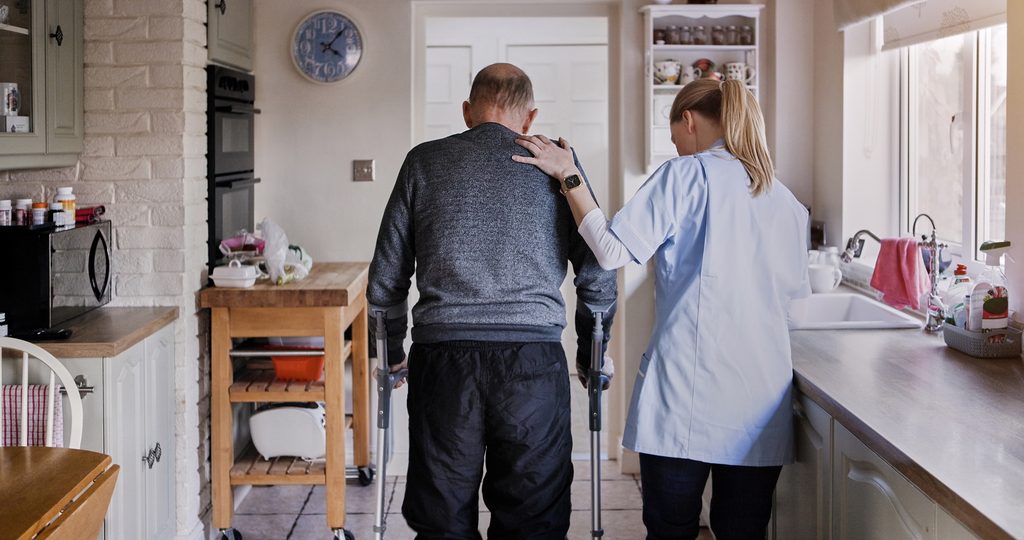
    Home care vs home health: a caregiver helping a client at home

    Home Care vs Home Health: Which One Do You Need?

    If the need is help with daily activities, safety, or company, home care is the place to start. If a doctor has ordered nursing or therapy, that is home health. If you’re not sure, call us at (760) 941-2273. A nurse can talk it through with you and schedule a free in-home evaluation.

  • Fall Prevention for Seniors at Home: Room-by-Room Checklist

    Fall prevention for seniors at home starts with small, simple changes. A fall can turn a healthy, independent routine upside down in a moment, and even a fall without injury can leave someone afraid to move around their own home. As a family of nurses caring for seniors across North County and San Diego County since 1999, we have seen how a few changes can make a home much safer.

    Use this room-by-room checklist whether you are looking out for yourself or for someone you love.

    Entryways, Hallways, and Stairs

    • Clear walkways of shoes, boxes, and clutter.
    • Move electrical and phone cords out of walking paths.
    • Remove throw rugs, or secure them firmly with non-slip backing.
    • Make sure every hallway and staircase is well lit, with switches at both ends.
    • Check that stairs have sturdy handrails, ideally on both sides.

    The Bathroom

    The bathroom is one of the most common places for a fall, because wet floors and tight spaces add up quickly.

    • Install grab bars by the toilet and in the tub or shower. Towel racks are not made to hold a person’s weight.
    • Use non-slip mats inside and outside the shower.
    • Consider a shower chair and a handheld shower head.
    • A raised toilet seat can make sitting and standing easier.
    • Keep a night light on for trips to the bathroom after dark.

    The Bedroom

    • Keep a lamp or touch light within easy reach of the bed.
    • Light the path from the bed to the bathroom.
    • Keep a phone close to the bed.
    • Sit on the edge of the bed for a moment before standing up, especially at night.

    The Kitchen

    • Store everyday dishes and food on lower shelves so there is no need for a step stool.
    • Wipe up spills right away.
    • Keep heavy pots and pans at waist height.

    Outside the Home

    Many North County homes have patios, garden paths, and hillside steps. Look for cracked or uneven walkways, garden hoses left across paths, and loose step railings. Good porch and driveway lighting helps, too, especially on the walk to the car.

    Health Habits That Support Fall Prevention for Seniors at Home

    Fall Prevention for Seniors at Home: Room-by-Room Checklist 1

    A safe home is only part of the picture. These habits matter just as much:

    • Review medications. Some medicines, or combinations of them, can cause dizziness or drowsiness. Ask a doctor or pharmacist to review the full list.
    • Check vision and hearing. Get regular eye exams and keep glasses clean and up to date.
    • Wear supportive shoes. Choose shoes with non-slip soles inside the house instead of loose slippers or socks.
    • Stay active. Walking and balance exercises approved by a doctor help keep legs strong.
    • Drink enough water. Dehydration can lead to dizziness and weakness.
    • Stand up slowly. Getting up too fast can cause lightheadedness.

    The CDC’s older adult falls page has more information for older adults and caregivers.

    How a Caregiver Can Help Prevent Falls

    For some people, the most effective fall prevention for seniors at home is having another person there. A caregiver can help with walking and getting around, steady transfers from a bed, chair, or wheelchair, and showering and dressing, which are some of the riskiest moments of the day. Caregivers also keep walkways clear, make sure meals and fluids aren’t skipped, and notice when someone seems weaker or more unsteady than usual, so family can be told early. If nights are the worry, overnight care means someone is there for trips to the bathroom. See our personal care services to learn more.

    After a Fall

    Always tell a doctor about a fall, even if nobody was hurt. A fall can be an early sign of a new health problem, a medication issue, or weakness that needs attention. If you or your loved one is coming home after a fall-related injury or surgery, our after-surgery care can help during recovery.

    Common Questions

    How soon can care start?

    We can often help with last-minute care when a need comes up quickly. Call the office and we will talk through what is needed.

    Is there a minimum number of hours?

    Visits start at four hours. There is no minimum number of days per week and no long-term contract.

    Do you care for people outside Vista?

    Yes. We are based in Vista and serve families throughout North County and San Diego County, including Fallbrook, Encinitas, Oceanside, and Escondido.

    Talk With a Family of Nurses

    Fall prevention for seniors at home is easier with a plan. Schedule a free in-home evaluation, and a nurse will visit, learn what is needed, and recommend a level of care. There is no cost and no obligation. Call us any time. If you leave a message, even after hours, we call you back within 30 minutes.
  • Signs Your Parent Needs Help at Home: What to Watch For

    Spotting the signs your parent needs help at home is not always easy. Changes often come slowly, and a parent who wants to stay independent may work hard to hide them. As a family of nurses who have cared for seniors across San Diego County since 1999, we have learned that the earliest clues usually show up in everyday life, long before a crisis.

    Here is what to watch for, and what you can do next.

    Changes Around the House

    A home often tells the story before your parent does. Look for:

    • Spoiled or expired food in the refrigerator, or very little food at all
    • Piles of unopened mail, late notices, or unpaid bills
    • A house that is much less tidy than it used to be
    • Laundry piling up, or the same sheets on the bed for weeks
    • Plants, pets, or the yard that are no longer being cared for

    Changes in Personal Care

    Daily routines like showering, dressing, and grooming take strength, balance, and energy. When those start to slip, it can be one of the clearest signs your parent needs help at home. You might notice your parent wearing the same clothes several days in a row, skipping showers, losing weight without trying, or missing medications. For example, Mom may be in the same sweater every time you stop by, or Dad’s belt may suddenly be on a tighter notch. A pill organizer that is still full at the end of the week is worth a closer look.

    Safety Warning Signs

    Some signs your parent needs help at home mean help may be needed sooner rather than later:

    • A fall, or several near-falls, even without injury
    • Bruises your parent can’t explain
    • Scorched pots, burners left on, or a smoke alarm going off
    • New dents or scratches on the car, or getting lost while driving
    • Trouble getting up from a chair, in and out of bed, or on and off the toilet

    Changes in Memory and Mood

    Everyone forgets things now and then. It becomes a concern when your parent repeats the same questions, misses appointments they never used to miss, or seems confused about the day or time. For example, your mom used to call every Sunday and now you are always the one calling, or your dad asks three times during lunch when you are coming back. Pulling away from friends, church, or hobbies they once enjoyed can also be a sign of loneliness, depression, or memory changes. The Alzheimer’s Association lists 10 early signs of Alzheimer’s that are worth reading, and their doctor is the right person to talk to about any of them. If memory loss is part of the picture, our caregivers are dementia-trained. Learn more about our dementia home care.

    Confusion that comes on suddenly, over a day or two, is different from slow changes. Call their doctor right away, because sudden confusion can be a sign of an infection or another medical problem.

    How to Check In Without Making Your Parent Feel Watched

    Most parents don’t want to feel inspected. These everyday ideas let you see how things are really going while you simply spend time together.

    • Stay for a meal. Cooking together shows you what is in the refrigerator, and whether your parent is eating well.
    • Offer to help with a chore. Folding laundry or sorting the mail together gives you a natural look around the house.
    • Take a short walk. Watch how steady your parent is, and whether they need to stop and rest more than before.
    • Ride along. Let your parent drive you to the store so you can see how comfortable they are behind the wheel.
    • Ask open questions. “What’s been the hardest part of your week?” gets a more honest answer than “Are you doing okay?”

    Keep a Simple Notes Log

    Write down what you notice, with the date, in a notebook or on your phone. A few short lines are enough, such as “Oct 12: Mom missed her eye appointment and said no one told her” or “Oct 19: Dad was out of breath walking to the mailbox.” Over a few weeks, a log shows whether changes are a one-time slip or a pattern. It also gives you specific examples to share with their doctor and the rest of the family.

    When the Family Caregiver Needs Help Too

    Sometimes the clearest signs are in you. If you are the one driving to every appointment, checking in every evening, and lying awake worrying, that load adds up. Missing work, feeling short-tempered, or getting sick more often are signals that your family needs support, too. Bringing in a caregiver for a few visits a week can give you time to rest and let you go back to simply being their son or daughter.

    If You Are Noticing These Signs in Yourself

    Not everyone who reads this is a worried adult child. If you are the one finding that housework, errands, or getting ready in the morning have become harder, asking for help is not giving up your independence. It is often what protects it. You do not need a doctor’s order to start home care, and you can call us yourself. Our article on home care vs. home health explains the difference.

    What to Do When You See Signs Your Parent Needs Help at Home

    1. Look over your notes log and pick the two or three examples that worry you most.
    2. Talk with your parent calmly and privately, and listen to what they want. Our guide on how to talk to your parents about home care includes example words you can use.
    3. Share your concerns with their doctor, especially about falls, weight loss, or memory.
    4. Schedule a free in-home evaluation. A nurse visits the home, learns what is needed, and recommends a level of care, with no cost and no obligation.

    Common Questions

    How do I know if it is really time for home care?

    If you are seeing more than one of the signs above, or if any safety sign has shown up, it is a good time to talk with a home care agency. Starting early, with a little help, is usually easier than starting after a fall or hospital stay.

    Can we start with just a few visits?

    Yes. Visits start at four hours, and you choose the days. There is no long-term contract, so you can add hours or scale back as needs change. Our home care cost page explains what shapes a quote.

    What kind of help can a caregiver give?

    Caregivers help with personal care, meals, light housekeeping, medication reminders, errands, transportation, and companionship. See all of our home care services.

    Where do you provide care?

    We are based in Vista and care for families throughout North County and across San Diego County, including Oceanside, Carlsbad, Escondido, and San Marcos.

    Signs your parent needs help at home

    Talk With a Family of Nurses

    If you are seeing signs your parent needs help at home, you do not have to sort it out alone. Call us any time. If you leave a message, even after hours, we call you back within 30 minutes.

Leave a Reply

Your email address will not be published. Required fields are marked *